Foods That Support Your Mood (Backed by Science)
Struggling with low energy, anxiety, or mood swings? Discover science-backed foods that support your mood, improve mental health, and help you feel more balanced naturally. Simple, realistic nutrition tips for women.
GUT HEALTH
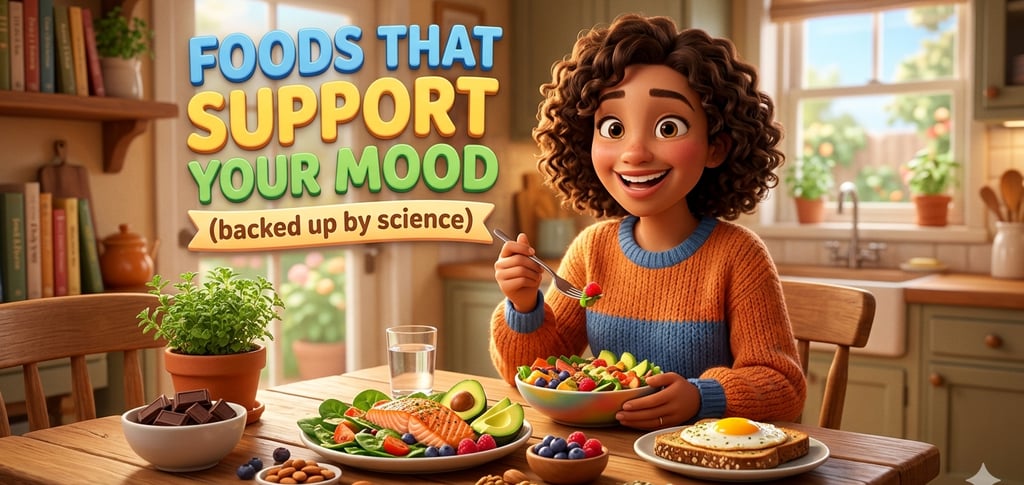
Let’s be real for a second—your mood isn’t just about your mindset.
It’s not just “think positive” or “get more sleep” (even though those things help). If you’ve been feeling anxious, low-energy, overwhelmed, or just off, there’s a very real chance your body is trying to tell you something—and a big part of that comes down to what you’re eating.
The connection between nutrition and mental health is something more women are finally starting to understand, and honestly? It explains a lot.
Your brain needs fuel. Not just calories—but specific nutrients that help regulate things like serotonin levels, cortisol, blood sugar, and hormones.
So if you’ve been feeling:
Moody for no clear reason
Constantly tired
Anxious or overstimulated
Mentally foggy
Or just not like yourself
This isn’t random. And it’s not something you have to just “push through.”
Let’s talk about the foods that support your mood (backed by science)—and how to actually start incorporating them into your everyday life in a simple, realistic way.
Why Food Plays a Huge Role in Your Mood
Before we get into specific foods, it helps to understand why this matters.
Your brain and gut are deeply connected (this is often called the gut-brain connection). In fact, about 90% of serotonin—your “feel good” neurotransmitter—is produced in your gut.
That means your daily food choices directly affect:
Mood stability
Stress response
Energy levels
Focus and clarity
And when your diet is full of processed foods, sugar spikes, or nutrient gaps? Your mood feels it.
The goal isn’t perfection. It’s supporting your body so it can support you back.
1. Healthy Fats (For Brain Function + Mood Stability)
If you’ve ever been told to avoid fat for health reasons, it’s time to let that go.
Your brain is made up of nearly 60% fat, so it makes sense that the right kinds of fat help it function better.
Mood-supporting benefits:
Helps regulate mood swings
Supports hormone balance
Reduces inflammation linked to depression
Best sources:
Avocados
Olive oil
Nuts (especially walnuts and almonds)
Seeds (chia seeds, flaxseeds)
These foods are rich in omega-3 fatty acids, which have been linked to lower rates of depression and improved emotional health.
Easy habit: Add avocado to your toast, toss nuts into your yogurt, or drizzle olive oil over your meals.
2. Berries (For Brain Protection + Stress Support)
There’s a reason berries are always labeled as “superfoods”—they actually live up to the hype.
They’re packed with antioxidants, which help protect your brain from oxidative stress (a major contributor to anxiety and mood disorders).
Mood-supporting benefits:
Supports brain function
Helps reduce inflammation
May improve symptoms of anxiety
Best options:
Blueberries
Strawberries
Raspberries
Easy habit: Add berries to smoothies, oatmeal, or just snack on them during the day.
3. Dark Chocolate (Yes, Really)
This is your sign to stop feeling guilty about loving chocolate.
High-quality dark chocolate (70% cacao or higher) contains compounds that can actually boost your mood.
Mood-supporting benefits:
Increases serotonin levels
Reduces stress hormones
Improves overall mood
It also contains a small amount of caffeine and magnesium, both of which can help with energy and relaxation.
Easy habit: A square or two after dinner = mood boost + balance.
4. Leafy Greens (For Mental Clarity + Energy)
If your energy has been dragging or your brain feels foggy, leafy greens can help more than you think.
They’re rich in folate, a B vitamin linked to lower rates of depression.
Mood-supporting benefits:
Supports brain function
Helps regulate mood
Boosts energy naturally
Best options:
Spinach
Kale
Arugula
Easy habit: Add a handful of greens to smoothies, salads, or even eggs.
5. Fatty Fish (For Anxiety + Depression Support)
Fatty fish are one of the most researched foods when it comes to mental health nutrition.
They’re loaded with omega-3s (EPA & DHA), which play a key role in brain health.
Mood-supporting benefits:
May reduce symptoms of depression
Supports emotional balance
Helps regulate stress response
Best options:
Salmon
Sardines
Mackerel
Easy habit: Aim for 1–2 servings per week. Keep it simple—grilled salmon or even canned options work.
6. Bananas (For Quick Mood + Energy Boost)
Bananas are one of the easiest, most underrated mood-supporting foods.
They contain vitamin B6, which helps your body produce serotonin.
Mood-supporting benefits:
Supports serotonin production
Helps stabilize blood sugar
Provides quick, steady energy
Easy habit: Pair a banana with protein (like peanut butter) to avoid energy crashes.
7. Eggs (For Brain Health + Emotional Stability)
Eggs are one of the most nutrient-dense foods you can eat—and they’re incredibly helpful for mood.
They contain:
Choline (important for brain function)
Vitamin D (linked to mood regulation)
Protein (for stable energy)
Mood-supporting benefits:
Supports cognitive function
Helps reduce brain fog
Keeps energy levels stable
Easy habit: Eggs for breakfast = better focus + fewer crashes later.
8. Fermented Foods (For Gut Health = Better Mood)
Remember that gut-brain connection we talked about? This is where it really matters.
Fermented foods contain probiotics, which support a healthy gut microbiome.
Mood-supporting benefits:
Improves gut health
Supports serotonin production
May reduce anxiety symptoms
Best options:
Yogurt (with live cultures)
Kefir
Sauerkraut
Kimchi
Easy habit: Add a spoonful of yogurt or fermented veggies to your meals.
9. Whole Grains (For Stable Energy + Mood)
If your mood feels like a rollercoaster, your blood sugar might be part of the problem.
Whole grains help keep your energy stable, which directly impacts how you feel mentally.
Mood-supporting benefits:
Prevents energy crashes
Supports steady mood
Helps reduce irritability
Best options:
Oats
Quinoa
Brown rice
Easy habit: Swap refined carbs for whole grains whenever possible.
10. Water (The Most Overlooked Mood Booster)
This one sounds simple—but it’s huge.
Even mild dehydration can lead to:
Fatigue
Brain fog
Irritability
Mood-supporting benefits:
Improves focus
Boosts energy
Supports overall brain function
Easy habit: Start your morning with water before coffee.
The Real Secret: It’s Not About Perfection
Here’s where a lot of people get stuck.
They read lists like this and think:
“I need to completely change my diet overnight.”
You don’t.
Supporting your mood with food is about small, consistent changes that add up over time.
Try this instead:
Add one mood-supporting food to your day
Focus on balance, not restriction
Pay attention to how you feel after eating
Your body gives you feedback; you just have to start noticing it.
What This Looks Like in Real Life
A “mood-supporting day” of eating doesn’t have to be complicated.
It might look like:
Breakfast: Eggs + avocado toast
Lunch: Salad with leafy greens, salmon, and olive oil
Snack: Banana with peanut butter
Dinner: Quinoa bowl with veggies
Treat: A square of dark chocolate
Simple. Realistic. Sustainable.
💬 Final Thoughts: Your Mood Isn’t Random
If you’ve been struggling with your mood, energy, or mental clarity, there’s nothing wrong with you.
Your body needs support.
The foods you eat every day can either:
Work against you
orWork for you
And the best part? You have more control over this than you think.
Start small. Stay consistent. And focus on giving your body what it actually needs.
Because when you support your body… your mood follows.
© 2026. Happy & Human. All rights reserved.
Health Disclaimer
Happy & Human has content that is health-oriented and may contain statistical information. This information is not professional or medical advice. The information on this website is accurate to the best of my knowledge. Readers act at their own risk; I am not liable for any decisions made based on the content of this blog. I reserve the right to edit, delete, or manage blog content at my discretion. They are opinions only. Users should understand that the information provided does not guarantee any specific results or outcomes. Consult a health care professional for any medical advice or treatment.
Curious about the products and little extras I genuinely love? These are all things I’ve personally used and truly recommend. No fluff, just favorites! Click on the “Happy Picks” button below to take a look.
Affiliate Disclaimer
Some of the links on Happy & Human are affiliate links, which means I may earn a small commission if you choose to make a purchase, at no extra cost to you. I only share products I genuinely use, love, or believe can support your wellness journey. Thank you for supporting this space and helping me make sure everyone can get this content.