The 3‑PM Crash Cure: Nutrition Strategies That Keep Your Energy Steady All Day”
Stop the afternoon slump with science‑backed nutrition strategies that stabilize blood sugar and support hormone health.
GUT HEALTH

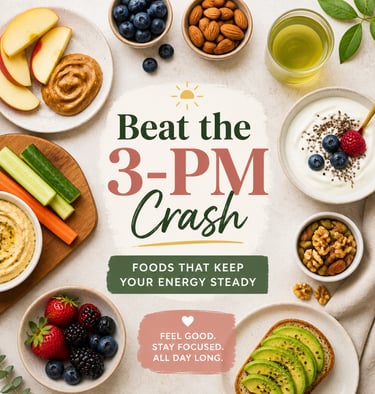
If you’re a woman between 25 and 55, chances are you’ve met the infamous 3‑PM crash—that moment when your brain fog rolls in, your eyelids get heavy, and your motivation quietly packs its bags and leaves. It’s frustrating, especially when you still have work to finish, kids to pick up, or a whole evening ahead of you.
The good news? That crash isn’t a personal flaw or a sign you need more caffeine. It’s usually your blood sugar, hormones, and energy-regulation systems waving a little white flag.
This guide breaks down why the crash happens and exactly what foods help you stay energized, focused, and steady—without overwhelming you with science or making you overhaul your entire diet.
Why the 3‑PM Crash Happens
Most women experience an energy dip between 2 PM and 4 PM, and there are a few very normal reasons:
• Your circadian rhythm naturally dips in the afternoon
• Your blood sugar may be crashing after a carb-heavy breakfast or lunch
• Your cortisol (stress hormone) may be fluctuating
• Your progesterone and estrogen shift throughout your cycle, affecting energy
• You may be underfueling or eating meals that spike and crash your glucose
This is why the crash feels like a mix of tiredness, irritability, cravings, and brain fog. It’s not just “being tired"—it"'s your body trying to stabilize itself.
If you want to dive deeper into the science behind this, you can explore blood sugar and hormones or hidden causes of fatigue.
The Secret to Avoiding the Crash
Stable energy comes from balanced blood sugar — not cutting carbs, not skipping meals, and not relying on caffeine.
When your blood sugar rises too fast (think: pastries, sugary coffee drinks, cereal, white bread), your body releases insulin to bring it back down. Sometimes it overcorrects, leading to a sharp drop — and that’s when the crash hits.
The cure?
Eating foods that digest slowly, release energy steadily, and keep your hormones happy.
Let’s break down the best options.
Foods That Keep Your Energy Steady All Afternoon
These foods aren’t trendy — they’re simply the ones your body loves. They help stabilize blood sugar, support hormones, and keep your energy smooth instead of spiky.
1. Protein‑Rich Foods (Your Energy Anchor)
Protein slows digestion, keeps you full, and prevents blood sugar spikes. Most women don’t eat enough protein earlier in the day, which sets the stage for the crash.
Great options:
• Greek yogurt or cottage cheese
• Eggs
• Chicken or turkey
• Tofu or tempeh
• Protein shakes with clean ingredients
• Edamame
Protein is especially helpful if you struggle with fatigue related to hormones. You can explore more about protein for hormone balance.
2. Healthy Fats (Your Hormone Helpers)
Healthy fats keep your energy steady and support hormone production — especially important for women dealing with PMS, perimenopause, or stress.
Try adding:
• Avocado
• Nuts and seeds
• Olive oil
• Nut butter
• Salmon or sardines
A handful of almonds or a spoonful of almond butter can prevent a crash better than a sugary snack.
3. Fiber‑Rich Carbs (Your Slow‑Burn Fuel)
Carbs aren’t the enemy — fast carbs are. Slow carbs give you energy without the crash.
Choose:
• Oats
• Quinoa
• Brown rice
• Lentils
• Chickpeas
• Sweet potatoes
• Whole‑grain bread
These carbs digest slowly, keeping your blood sugar stable and your brain sharp.
4. Magnesium‑Rich Foods (Your Stress‑Soothers)
Magnesium helps regulate cortisol and energy production. Many women are low in magnesium, which can worsen fatigue.
Magnesium‑rich foods include:
• Pumpkin seeds
• Spinach
• Dark chocolate (70%+)
• Black beans
• Cashews
If you want to learn more, check out magnesium for women.
5. Iron‑Boosting Foods (Your Oxygen Carriers)
Low iron = low energy. It’s one of the most common causes of fatigue in women.
Iron‑rich foods:
• Lean red meat
• Spinach
• Lentils
• Pumpkin seeds
• Fortified cereals
• Beans
Pair iron with vitamin C (like citrus or berries) to help your body absorb it better. If you suspect low iron, explore iron deficiency signs.
6. Mood‑Boosting Foods (Your Afternoon Pick‑Me‑Ups)
These foods support neurotransmitters like serotonin and dopamine—helping you stay mentally sharp.
Try:
• Berries
• Bananas
• Eggs
• Dark chocolate
• Fermented foods (yogurt, kefir, kimchi)
These foods help stabilize mood and energy without relying on sugar.
What to Drink to Avoid the Crash
Hydration plays a huge role in energy. Even mild dehydration can cause fatigue, headaches, and brain fog.
Best choices:
• Water with electrolytes
• Green tea (gentle caffeine + antioxidants)
• Herbal teas (peppermint, ginger, rooibos)
• Coconut water
Drinks to limit:
• Sugary coffee drinks
• Energy drinks
• Soda
• Fruit juice
These cause quick spikes and crashes.
If caffeine affects your hormones, you can explore caffeine and hormone balance.
Easy Snack Ideas to Prevent the Crash
These snacks combine protein + fat + fiber, which is the magic trio for steady energy.
Snack combos that work:
• Apple slices + almond butter
• Greek yogurt + berries
• Hummus + whole‑grain crackers
• Cottage cheese + pineapple
• Hard‑boiled eggs + a handful of nuts
• Avocado toast on whole‑grain bread
• Protein shake + chia seeds
These take less than 2 minutes to make and keep your energy stable for hours.
For more ideas, explore hormone‑friendly snacks.
Lunch Ideas That Prevent the Crash
If your lunch is too light or too carb‑heavy, the crash is almost guaranteed.
Build your lunch like this:
Protein + Fiber‑Rich Carb + Healthy Fat + Veggies
Examples:
• Chicken bowl with quinoa, avocado, and veggies
• Lentil soup + whole‑grain toast
• Salmon salad with olive oil dressing
• Turkey wrap with hummus and greens
• Tofu stir‑fry with brown rice
Balanced lunches = stable afternoons.
You can explore more hormone‑friendly lunch ideas.
Lifestyle Habits That Help Prevent the Crash
Food is the foundation, but habits matter too.
1. Eat within 1–2 hours of waking
This helps stabilize cortisol and blood sugar.
2. Don’t skip lunch
Skipping meals guarantees a crash.
3. Get sunlight before noon
It boosts circadian rhythm and energy.
4. Take a 10‑minute walk after lunch
This helps regulate blood sugar and digestion.
Learn more about walking for stress.
5. Manage stress throughout the day
High cortisol = unstable blood sugar.
Try breathwork or grounding techniques.
A Sample Day of Eating for Steady Energy
Here’s a simple, realistic example:
Breakfast
Greek yogurt + berries + chia seeds
Green tea
Snack
Apple + almond butter
Lunch
Chicken and quinoa avocado bowl
Snack
Cottage cheese + pineapple
Dinner
Salmon + sweet potato + veggies
Evening
Magnesium tea or dark chocolate square
This isn’t a diet—it's a rhythm that supports your hormones and energy
Finally
The 3 PM crash isn’t a mystery—it's a message. Your body is asking for steadier fuel, calmer stress hormones,
and more balanced meals.
When you give your body what it needs, your energy becomes the following:
• More stable
• More predictable
• More supportive of your busy life
And the best part? You don’t have to overhaul everything. Just a few small shifts can make your afternoons feel lighter, clearer, and more energized.
© 2026. Happy & Human. All rights reserved.
Health Disclaimer
Happy & Human has content that is health-oriented and may contain statistical information. This information is not professional or medical advice. The information on this website is accurate to the best of my knowledge. Readers act at their own risk; I am not liable for any decisions made based on the content of this blog. I reserve the right to edit, delete, or manage blog content at my discretion. They are opinions only. Users should understand that the information provided does not guarantee any specific results or outcomes. Consult a health care professional for any medical advice or treatment.
Curious about the products and little extras I genuinely love? These are all things I’ve personally used and truly recommend. No fluff, just favorites! Click on the “Happy Picks” button below to take a look.
Affiliate Disclaimer
Some of the links on Happy & Human are affiliate links, which means I may earn a small commission if you choose to make a purchase, at no extra cost to you. I only share products I genuinely use, love, or believe can support your wellness journey. Thank you for supporting this space and helping me make sure everyone can get this content.