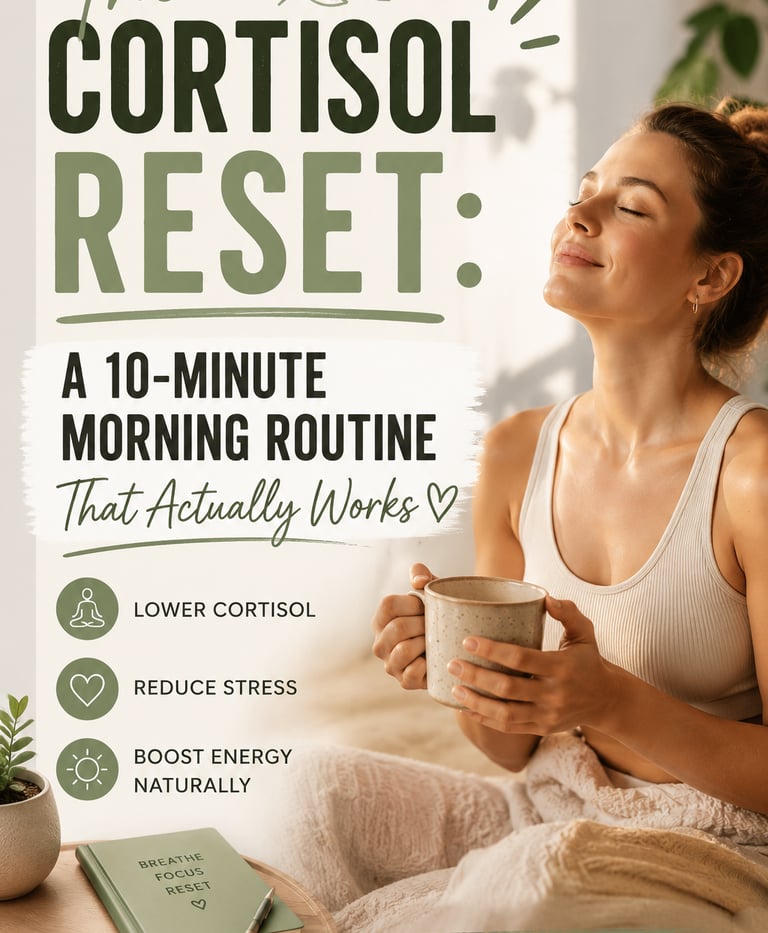
The Cortisol Reset: A 10-Minute Morning Routine That Actually Works
: Looking for a simple way to lower cortisol naturally? Discover a science-backed 10-minute morning routine that helps reduce stress, improve energy, and start your day feeling calmer.
Have you ever woken up already feeling overwhelmed?
Before you've even gotten out of bed, your mind is racing through everything you need to do. Emails. Kids. Work. Bills. Laundry. Appointments. That endless mental checklist starts before your feet even hit the floor.
If this sounds familiar, you're not alone.
Many women spend their mornings accidentally doing things that spike cortisol—the body's primary stress hormone—instead of calming it down. While cortisol isn't the enemy (it's actually essential for waking us up and keeping us alert), chronically high cortisol can leave you feeling exhausted, anxious, irritable, and constantly running on empty.
The good news?
You don't need an hour-long morning routine, an expensive wellness program, or complicated supplements.
In fact, just 10 intentional minutes each morning can help regulate your stress response, lower unnecessary cortisol spikes, and set a calmer tone for the rest of your day.
Let's talk about the simple morning routine that actually works—and why it works.
First, What Is Cortisol?
Cortisol is often called the "stress hormone," but that's only part of the story.
Your adrenal glands naturally release cortisol every morning as part of your body's wake-up cycle. This is known as the Cortisol Awakening Response, and it's completely normal.
Healthy cortisol helps you:
Wake up feeling alert
Maintain healthy blood sugar
Support metabolism
Regulate inflammation
Give your body energy
The problem isn't cortisol itself.
The problem happens when your body keeps producing extra cortisol because it thinks you're under constant stress.
Things like:
Poor sleep
Chronic anxiety
Skipping meals
Too much caffeine
Overtraining
Constant notifications
Emotional stress
...can keep cortisol elevated much longer than it should be.
Signs Your Cortisol May Be Running Too High
While only a healthcare provider can diagnose hormone-related conditions, many women notice symptoms such as:
Feeling wired but exhausted
Brain fog
Mid-afternoon energy crashes
Difficulty losing weight
Increased belly fat
Anxiety
Poor sleep
Frequent headaches
Sugar cravings
Feeling overwhelmed by small things
If several of these sound familiar, your morning habits could be making things worse—or better.
The 10-Minute Cortisol Reset Routine
Here's the routine.
It's simple.
No fancy equipment.
No expensive products.
No waking up at 5:00 AM.
Just ten intentional minutes.
Minute 1–2: Don't Reach for Your Phone
This might be the hardest step.
Most of us wake up and immediately check:
Email
Social media
News
Text messages
Work notifications
Within seconds, your brain shifts into problem-solving mode.
Your heart rate increases.
Your stress response activates.
Instead, leave your phone alone for the first couple of minutes.
Take a few deep breaths.
Stretch.
Notice how your body feels.
Giving your brain even two minutes of peace can dramatically change how the rest of your morning unfolds.
Minute 3–4: Get Natural Sunlight
One of the easiest ways to support healthy cortisol is by stepping outside.
Morning sunlight helps regulate your body's internal clock, which supports:
Better cortisol balance
Improved mood
Better sleep later that night
Increased daytime energy
You don't need bright sunshine.
Even a cloudy morning provides beneficial natural light.
Open your blinds.
Sit on the porch.
Walk to the mailbox.
Stand outside with your coffee.
Aim for just a couple of minutes.
Minute 5–6: Drink Water Before Coffee
Many of us wake up dehydrated.
After sleeping for seven or eight hours without fluids, your body needs water first.
Hydration supports:
Energy
Brain function
Digestion
Circulation
Hormone balance
Try drinking a full glass of water before your first cup of coffee.
If you enjoy lemon, adding a squeeze is perfectly fine—but plain water works just as well.
Minute 7–8: Move Your Body Gently
You don't need an intense workout first thing in the morning.
In fact, for women already dealing with chronic stress, very intense exercise immediately after waking may increase cortisol temporarily.
Instead, choose gentle movement:
Stretching
Yoga
Walking
Mobility exercises
Light dancing
Simple bodyweight movements
The goal isn't burning calories.
The goal is to tell your nervous system,
"We're safe. We're moving. Everything is okay."
Even two minutes count.
Minute 9–10: Practice Calm Breathing
This may sound almost too simple.
But slow breathing is one of the quickest ways to calm your nervous system.
Try this:
Breathe in through your nose for four seconds.
Hold for two seconds.
Exhale slowly for six seconds.
Repeat five times.
Long, slow exhalations activate your parasympathetic nervous system—often called the "rest and digest" mode—which helps counteract the body's stress response.
You'll probably notice your shoulders relax before you're even finished.
Bonus Habit: Eat a Protein-Rich Breakfast
This isn't part of the 10-minute routine itself, but it's worth mentioning.
Skipping breakfast may work well for some people, but for others—especially women experiencing chronic stress—it can contribute to energy crashes and increased hunger later in the day.
A balanced breakfast with protein can help stabilize blood sugar and support steady energy.
Some simple ideas include:
Greek yogurt with berries
Eggs and whole-grain toast
Cottage cheese and fruit
Protein smoothie
Oatmeal with nuts and seeds
You don't need perfection.
Just aim for something nourishing.
Morning Habits That May Increase Cortisol
Sometimes it's just as helpful to know what not to do.
Consider limiting these first thing in the morning:
Immediately checking work emails
Doomscrolling social media
Drinking several cups of coffee before eating
Skipping water
Rushing out the door every day
Starting your day already multitasking
Jumping into stressful conversations
Small changes here can make a surprisingly big difference over time.
Why This Routine Actually Works
Unlike trendy wellness hacks, every step of this routine supports your body's natural systems.
Here's why:
Natural light helps regulate your circadian rhythm.
Hydration improves energy and cognitive function.
Gentle movement increases circulation without overwhelming your body.
Breathing exercises activate your relaxation response.
Reducing phone use limits unnecessary stress triggers before your day even begins.
None of these habits work because they're "magic."
They work because they help your body do what it was designed to do.
What Results Can You Expect?
Everyone's body is different.
Some women notice feeling calmer within a few days.
Others experience gradual improvements over several weeks.
You may begin to notice:
More stable energy
Better focus
Less morning anxiety
Improved mood
Fewer afternoon crashes
Better sleep at night
Feeling less reactive to daily stress
Remember, this isn't about becoming stress-free.
It's about becoming more resilient.
The Secret Is Consistency
One great morning won't erase months or years of chronic stress.
But ten minutes every day?
That adds up.
Ten minutes a day becomes:
70 minutes each week
Over 300 minutes each month
More than 60 hours every year are spent supporting your health
That's a powerful investment in yourself.
Your Morning Doesn't Have to Feel Like a Race
Many of us have been taught that productivity should start the second we wake up.
But your nervous system wasn't designed to go from asleep to overwhelmed in thirty seconds.
A slower, more intentional start doesn't make you lazy.
It makes you healthier.
And the beautiful thing is that you don't need a complete lifestyle overhaul to feel the benefits.
Start tomorrow with just ten minutes:
Leave your phone alone.
Step into the morning light.
Drink a glass of water.
Stretch your body.
Take a few slow breaths.
Simple habits, repeated consistently, can have a surprisingly big impact on how you feel—not just in the morning, but throughout your entire day.
Your body has been working hard to keep up with everything life throws at it. Sometimes the most powerful thing you can do is give it a calmer place to begin.
© 2026. Happy & Human. All rights reserved.
Health Disclaimer
Happy & Human has content that is health-oriented and may contain statistical information. This information is not professional or medical advice. The information on this website is accurate to the best of my knowledge. Readers act at their own risk; I am not liable for any decisions made based on the content of this blog. I reserve the right to edit, delete, or manage blog content at my discretion. They are opinions only. Users should understand that the information provided does not guarantee any specific results or outcomes. Consult a health care professional for any medical advice or treatment.
Curious about the products and little extras I genuinely love? These are all things I’ve personally used and truly recommend. No fluff, just favorites! Click on the “Happy Picks” button below to take a look.
Affiliate Disclaimer
Some of the links on Happy & Human are affiliate links, which means I may earn a small commission if you choose to make a purchase, at no extra cost to you. I only share products I genuinely use, love, or believe can support your wellness journey. Thank you for supporting this space and helping me make sure everyone can get this content.