Why you’re waking up at 3 AM during perimenopause (And what you can do about it)
Waking up at 3 AM during perimenopause? Learn why hormone changes disrupt sleep and what you can do to fall asleep faster and stay asleep longer.
SLEEP OPTIMIZATION

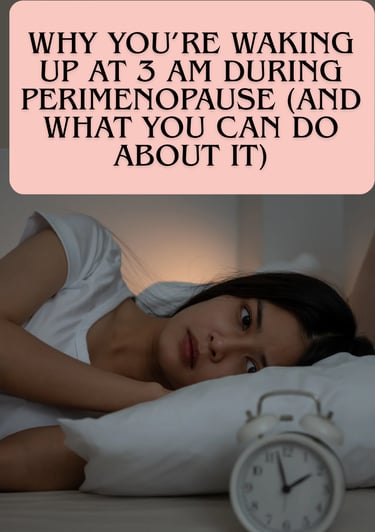
It’s 3:04 AM.
You’re staring at the ceiling fan, listening to the quiet hum of the house. Meanwhile, your partner is sleeping peacefully beside you, snoring lightly, completely unaware that you’ve been awake for the past 47 minutes thinking about hormones, tomorrow’s to-do list, and whether the dog heard something.
You try to fall back asleep.
You flip the pillow and check the clock again.
Still awake.
If this sounds familiar, you’re not alone. Many women in their 40s and 50s find themselves waking up around 3 AM night after night. It’s so common that some people jokingly call it the “3 AM Club.”
In honor of World Sleep Day on March 13th, I wanted to talk about why this happens during perimenopause—and more importantly, what you can actually do about it.
Most importantly losing sleep every night isn’t something you just have to live with.
Perimenopause: The Transition Nobody Fully Prepares You For
Before we solve the 3 AM mystery, it helps to understand what’s happening in your body.
Perimenopause is the transitional phase leading up to menopause. For many women, it can last anywhere from two to ten years.
During this time, your ovaries slowly begin producing less estrogen and progesterone.
But here’s the tricky part: these hormones don’t decline in a nice, neat, predictable way.
Instead of a light switch turning off, they behave more like a flickering candle—spiking one week, dropping the next.
Most people associate perimenopause with hot flashes. But for many women, sleep disruption is actually one of the earliest signs that hormonal changes are underway.
And that brings us back to the question many women Google at 3 AM:
Why does it keep happening at the same time every night?
Why 3 AM? The Science Behind the “Witching Hour”
It might feel personal, but the 3 AM wake-up call usually comes down to a few biological factors.
1. The Progesterone Drop
Progesterone is sometimes called the “calming hormone.” it naturally helps your brain relax.
During perimenopause, progesterone levels often fall earlier and faster than estrogen.
Without that natural calming effect, your sleep becomes lighter and more fragile. Small things that once wouldn’t wake you—temperature shifts, noise, or stress hormones—can suddenly pull you right out of your beautiful, normal sleep.
2. The Estrogen and Cortisol Connection
Estrogen plays a bigger role in your stress response than most people realize.
When estrogen levels drop, your body becomes more sensitive to cortisol, the hormone responsible for your fight-or-flight response.
Normally, cortisol is lowest during the night and gradually rises toward morning to help you wake up.
But during perimenopause, that cortisol rise can happen too early.
Instead of gently waking you up at 6 or 7 AM, your body sends that alert signal at 3 AM, leaving you suddenly wide awake. How messed up is that?
3. The Blood Sugar Crash
This is one of the most overlooked reasons women wake up in the middle of the night.
Hormones like estrogen and progesterone also influence how your body handles insulin and blood sugar.
As those hormones fluctuate, blood sugar can become more unstable.
If your blood sugar drops too low overnight, your brain sees it as an SOS signal and to fix the problem, it releases cortisol and adrenaline to raise your glucose levels.
The result?
You wake up suddenly—often with a racing heart or feeling anxious.
Alcohol, sugary snacks, or high-carb dinners can make this even worse by causing a spike and crash during the night.
4. Subtle Night Sweats
Not every hot flash feels dramatic.
Sometimes your body temperature rises just enough to pull you out of deep sleep, even if you don’t wake up drenched in sweat.
Your brain senses the temperature change and shifts you into lighter sleep—or wakes you up entirely.
You may not even realize a hot flash happened.
Why Sleep Matters More Than You Think
When sleep disruption becomes a nightly pattern, the effects go far beyond feeling tired the next day.
Your brain and body rely on sleep for critical repair processes.
Without it, you may notice:
Mood swings and anxiety
Sleep deprivation makes emotional regulation much harder.
Brain fog
Difficulty concentrating is often just accumulated sleep debt.
That’s why one bad night of sleep can suddenly make everything—from stress to food choices—feel harder the next day.
How to Break the 3 AM Wake-Up Cycle
The good news? There are several ways to support your body and improve sleep during perimenopause.
Small changes can make a big difference.
1. Optimize Your Sleep Environment
You may not be able to control your hormones overnight—but you can control your sleep environment.
Keep your bedroom cool.
Research suggests the ideal sleep temperature is around 65°F (18°C). Cooling sheets made from bamboo can help and they do!
Create a screen-free wind-down routine.
The blue light from phones and tablets suppresses melatonin, the hormone that helps you fall asleep. Try switching to a book or calming routine about an hour before bed. I know this is different, not ideal probably but we definitely need our sleep!
2. Eat With Your Nighttime Hormones in Mind
What you eat in the evening can directly affect whether you wake up at 3 AM.
Prioritize protein at dinner.
Meals that include protein, fiber, and healthy fats help keep blood sugar stable overnight.
Avoid alcohol before bed.
Alcohol may make you sleepy at first, but it disrupts sleep later in the night.
Try a small bedtime snack if needed.
If you frequently wake up hungry or shaky, a small snack with fat or protein—like almond butter or walnuts—can help stabilize blood sugar.
3. Consider Gentle Sleep-Supporting Supplements
Some natural supplements may help support relaxation and sleep.
Common options include
Magnesium glycinate – helps calm the nervous system
L-theanine – promotes relaxation without making you groggy
Melatonin-our body naturally produces it and during times like these when our hormones have us out of whack, a little bit of melatonin could make a difference.
Always talk to a doctor before starting new supplements.
4. Follow the “15-Minute Rule”
If you wake up and can’t fall back asleep within about 15 minutes, try getting out of bed.
Staying in bed while frustrated can train your brain to associate the bed with wakefulness and stress.
Instead, move to a dimly lit room and do something relaxing or boring—reading, folding laundry, or listening to quiet music.
Return to bed once you feel sleepy again.
When It’s Time to Talk to a Doctor
If sleep disruption continues despite lifestyle changes, it may be time to speak with a healthcare provider who specializes in menopause.
For some women, hormone therapy can significantly improve sleep by stabilizing estrogen levels and restoring progesterone.
It’s also important not to overlook sleep apnea, which becomes more common after menopause. If you snore heavily, wake up gasping, or feel exhausted even after a full night in bed, a sleep study may help identify the issue.
You’re Not Alone in the 3 AM Club
Waking up at 3 AM during perimenopause can feel isolating—especially when the rest of the house is asleep.
But it’s actually one of the most common experiences women report during this stage of life.
The good news is that it’s not permanent, and it’s not something you just have to power through.
With the right combination of lifestyle changes, sleep support, and (when needed) medical guidance, it’s possible to get your nights—and your energy—back.
And honestly, we could all use a little more sleep.
What’s your biggest sleep struggle right now?
Is it falling asleep, staying asleep, or those frustrating 3 AM wake-ups?
Let’s talk about it in the comments. Women sharing these experiences is how we start breaking the silence around perimenopausal!
© 2026. Happy & Human. All rights reserved.
Health Disclaimer
Happy & Human has content that is health-oriented and may contain statistical information. This information is not professional or medical advice. The information on this website is accurate to the best of my knowledge. Readers act at their own risk; I am not liable for any decisions made based on the content of this blog. I reserve the right to edit, delete, or manage blog content at my discretion. They are opinions only. Users should understand that the information provided does not guarantee any specific results or outcomes. Consult a health care professional for any medical advice or treatment.
Curious about the products and little extras I genuinely love? These are all things I’ve personally used and truly recommend. No fluff, just favorites! Click on the “Happy Picks” button below to take a look.
Affiliate Disclaimer
Some of the links on Happy & Human are affiliate links, which means I may earn a small commission if you choose to make a purchase, at no extra cost to you. I only share products I genuinely use, love, or believe can support your wellness journey. Thank you for supporting this space and helping me make sure everyone can get this content.